
Unmatched Energy Efficiency and Comfort
passiv house certification

At MPMR we are specialists in PASSIVE HOUSE.
At MPMR architecture we are committed to excellence in architectural design, and to achieve this we base ourselves on the Passivhaus standard, being certified Passivhaus designers. Whether you are looking to build a home, renovate an existing space, or design a commercial project, we provide the necessary expertise to fully leverage the benefits of Passive House. We design buildings that save energy, provide unparalleled comfort, and make a difference in terms of sustainability.
A Sustainable Future starts with Passivhaus Design
This innovative and sustainable approach to building design combines energy efficiency with maximum comfort. At MPMR ARCHITECTURE, we are excited to share our expertise and help you create a more sustainable and comfortable future for you and the planet.
Contact us today and discover how Passivhaus design can transform your projects!
Discover Passive House Design
Unmatched Energy Efficiency and Comfort
Energy Efficiency
Passive House buildings are designed and built to minimize energy consumption. This is achieved through superior insulation, controlled ventilation, high-quality windows, and proper orientation. The result is a significant reduction in energy costs over the life of the building.
Comfort
Passive House buildings are designed to maintain a constant and comfortable indoor environment. In winter, you won’t feel cold drafts, and in summer, you’ll enjoy a cool and pleasant atmosphere. The indoor air quality is exceptional due to controlled ventilation, contributing to the health and well-being of occupants.
Sustainability
Passive House principles promote sustainability by reducing a building’s carbon footprint. By minimizing the need for heating and cooling, the environmental impact is reduced. This is crucial for those seeking environmentally friendly buildings and wanting to contribute to the fight against climate change.
How is it achieved?
It involves creating a building that is as airtight and insulated as possible, so once an optimal indoor temperature is reached, the interior heat or cold remains stable regardless of the external temperature.
All of this is achieved with controlled humidity conditions and indoor air quality, thanks to mechanical ventilation with heat recovery, which functions as the lungs of the building. Maintaining a constant flow of air from the outside, preheated or pre-cooled by the indoor air.
A Passive House functions like a thermos, keeping liquids hot without the need for an external energy source.
To achieve the comfortable interior temperature, the energy input is very low compared to other construction standards. Significantly reducing the need for active systems. This translates into energy savings and reduced CO2 emissions.
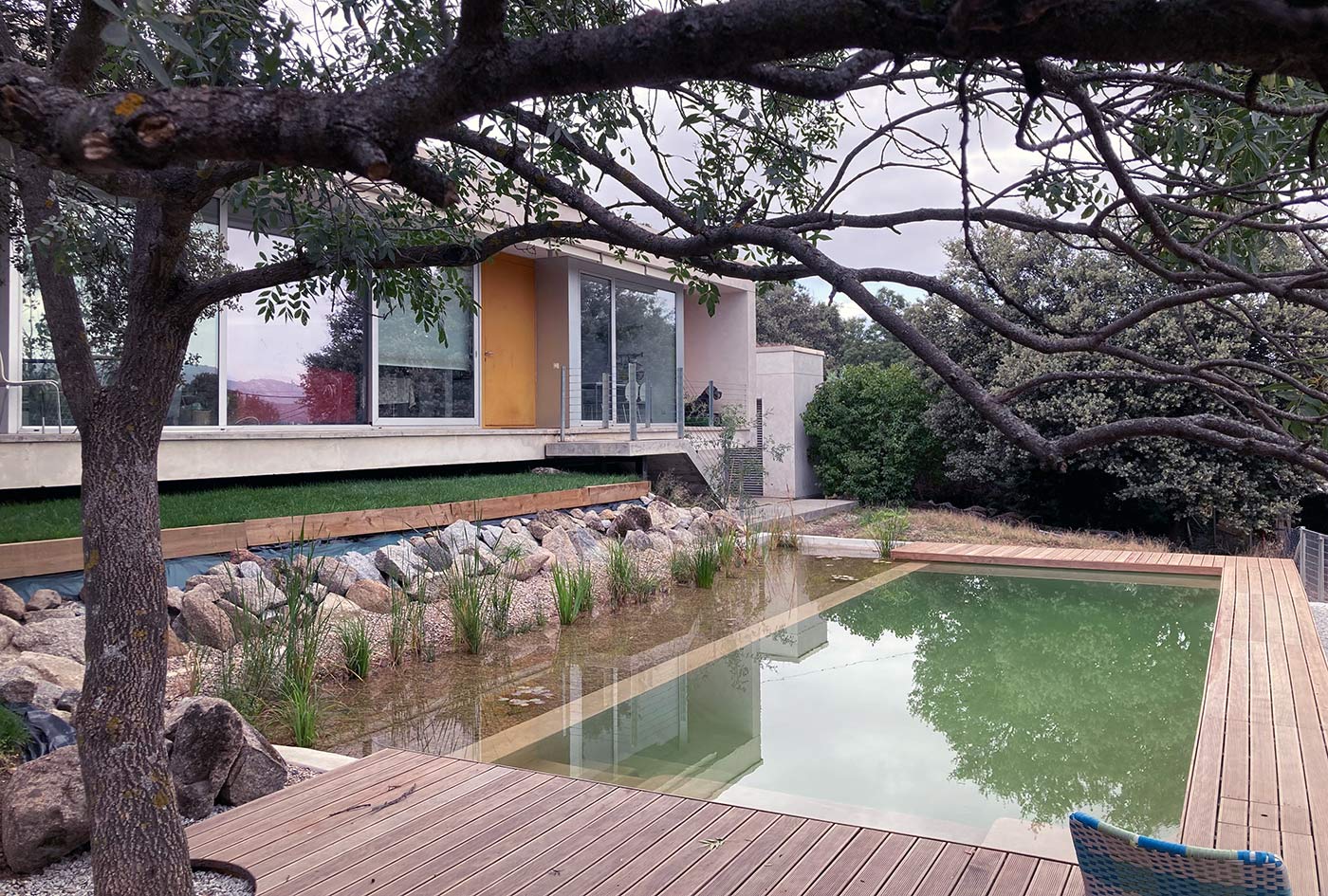
The 5 Passive House principles consist of:
- CONTINUOUS AND HIGH-PERFORMANCE THERMAL INSULATION
- THERMAL BRIDGE-FREE CONSTRUCTION
- HIGH-PERFORMANCE WINDOWS
- CONTINUOUS AIRTIGHT BUILDING ENVELOPE
- MECHANICAL VENTILATION SYSTEM WITH HEAT RECOVERY
- Energy Demand for Heating/Cooling <<= 15 kWh/(m2a)
- Maximum Heating/Cooling Load <= 10 W/m2
- Airtightness <= 0.6/h
- Total Primary Energy Demand <= 100 kWh/m² if non-renewable or less than 60 kWh/m² if renewable
- Summer Overheating Percentage <= 10%
Passive House is a global standard, meaning that conditions vary depending on the climate zone where the building is located, with different requirements for the defined 7 climate zones.
In Spain, the climate zones correspond to a Warm Temperate or Warm climate, which makes the standard require lower performance than in central Europe. For example, in a warm climate, a building can be certified with double glazing.
And then, can’t I open the windows?
One of the principles of Passive House is building airtightness and controlled mechanical ventilation. This principle has led to the misconception that a Passive House cannot be ventilated with the Mediterranean gesture of opening windows. Nothing could be further from the truth. One of the passive measures that the standard establishes for cooling is natural night ventilation through cross ventilation. This essentially involves opening windows when the outside temperature is lower than the inside temperature, allowing the entry and circulation of cold air from outside into the building during summer.
What Passive House achieves regarding the gesture of opening windows in the morning is to optimize this natural ventilation. Once the optimal indoor temperature is achieved, the windows are closed, and the airtight, well-insulated building with mechanical ventilation allows maintaining this temperature throughout the day.
mechanical ventilation allows maintaining this temperature throughout the day. Similar to this measure, the standard also incorporates passive design measures, such as optimizing the size and orientation of window openings for maximum warming in winter and solar protection measures in summer to prevent excessive solar gain.
What steps need to be followed to make a Passive House?
1
1. Have a Certified PASSIVHAUS DESIGNER AND TRADESPERSON
To build a Passive House, it is necessary to have a designer certified by the Passivhaus Institute. At MPMR, we are certified designers, ensuring quality in the design and construction of low-consumption buildings.
2
2. Design the building under the Passive House standard.
The Passive House designer uses the calculation tool from the Passivhaus Institute, the PHPP program, to optimize building performance by entering all the standard compliance parameters.
3
3. Physical quality test during construction.
The building’s airtightness must be ensured by conducting a Blower Door Test during and at the completion of the work. This test verifies that the design parameters are actually present in the constructed or retrofitted building.
4
Certification Process with an Independent Organization
Only a certified Passive House is a Passive House. An independent organization authorized by the Passivhaus Institute verifies that all parameters entered in the PHPP are correct, as well as their proper execution, through the verification of construction materials, inspection of thermal bridges, or examination of interstitial condensation in the building’s enclosure.
In conclusion, the entire process ensures that the design and built complies with the standard under rigorous quality control.
At MPMR architecture we are committed to excellence in architectural design, and to achieve this we base ourselves on the Passivhaus standard, being certified Passivhaus designers.
Whether you are looking to build a home, renovate an existing space, or design a commercial project, we provide the necessary expertise to fully leverage the benefits of Passive House.
We design buildings that save energy, offer unsurpassed comfort and make a difference in terms of sustainability.